Off-Campus Programs
Academics / Departments & Programs / Engineering / Student Experience / Off-Campus Programs
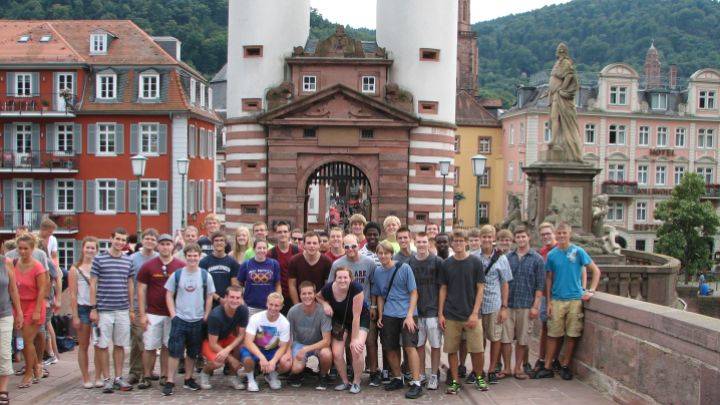
Take your skills and knowledge abroad! Your engineering studies could see you putting your learning to work in places like Germany, Mexico, Ecuador, and the Netherlands. You'll experience new cultures while you engage in engineering projects that bolster local communities.
Summer programs
-
Water, Engineering, and Chemistry in Ecuador 2023
- Discover the technical, political, cultural, economic, health and spiritual issues of clean water access.
-
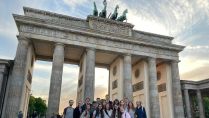
ENGR 202: Summer Program in Germany
- Take Calvin’s ENGR 202 class and learn some German language and culture with the Technische Universität Berlin.
-
SCM 311: Global Supply Chain Practicum - Mexico
- The Global Supply Chain Practicum is an international travel course required for students pursuing the OSCM major but is open to everyone.
-
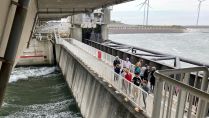
BIO/IDIS 372: Dutch Sustainability: Is Orange the New Green?
- When faced with sustainability challenges, the Dutch have always innovated their way towards a more stable and resilient environment.


Take the next step:

ACADEMIC OPTIONS
With over 100 majors and programs, you’re bound to find something you love.
Browse by category
- Arts
- Business
- Communication & Media Studies
- Education
Undergraduate education
- Birth to Kindergarten
- Pre-Kindergarten to 3rd Grade
- 3rd to 6th Grade
- Art: Pre-K to 12th Grade
- French: Pre-K to 12th Grade
- Health & PE: Pre-K to 12th Grade
- Spanish: Pre-K to 12th Grade
- Special Education Pre-K to 12th Grade
- TESOL: Pre-K to 12th Grade
- Secondary Education
- English: 5th to 9th Grade
- Math: 5th to 9th Grade
- Science: 5th to 9th Grade
- Social Studies: 5th to 9th Grade
- English: 7th to 12th Grade
- Math: 7th to 12th Grade
- Science: 7th to 12th Grade
- Social Studies: 7th to 12th Grade
- Health Sciences
- Exercise Science
- Kinesiology (Pre-professional Emphasis)
- Nursing
- One Health
- Pre-Dentistry
- Pre-Medicine
- Pre-Occupational Therapy
- Pre-Optometry
- Pre-Pharmacy
- Pre-Physical Therapy
- Pre-Physician Assistant
- Pre-Podiatry
- Pre-Veterinary
- Public Health
- Recreation Leadership
- Speech Pathology and Audiology (BA, MA)
- Master of Speech Pathology
- Theraputic Recreation
- Humanities
- Ministry
- Science, Technology, Engineering & Mathematics
- Social Sciences
- World Languages & Cultural Studies

Apply to Calvin
It all starts here! We accept applications on a rolling basis throughout the year. All completed applications receive equal consideration.
Start your journey
Visit Calvin
Find the visit option that works best for you and get a taste for life at Calvin!
Browse Visit Options Launch the virtual tour
Request Info
Learn why Calvin’s dedication to faith and discovery have earned it the rank of #3 among regional Midwest universities.
Loading...

Costs & Financial Aid
Families from all economic backgrounds—many just like yours—are making Calvin work. Scholarships, grants and loans are the tools that make Calvin possible.
Explore financial aid & Scholarships How much does Calvin cost?