

By Lynn Bolt Rosendale '85
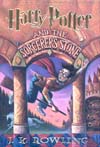
With the upcoming release of the fifth book in the Harry Potter series by J.K. Rowling and the November opening of the movie based on the first title “Harry Potter and the Sorcerer’s Stone,” the cauldron is being stirred once again.
Just what is all the hype about this boy wizard and what is a Christian to think? The books have been banned in several schools, criticized in churches and volumes have been written on both the good and evil in the Harry Potter books.
Calvin English professor Gary Schmidt, himself an author of several children’s books, suggests that there are three basic charges that critics are bringing up against the books. In an article for “Christian Home and School” magazine he wrote, “One is that the book is full of hate….A second charge is that the books are brutal, particularly because Harry’s parents are cruelly murdered….The third charge—and I suspect the one at the core of the uproar—is that Harry Potter books promote an interest in witchcraft.”
Yet, no other book or series has gained such immediate success as these with all four volumes spending months on the New York Times bestseller list. Sales of the books top 48 million since the introduction of the first book in 1997. Last summer readers, young and old alike, eagerly anticipated the release of the fourth book, “Harry Potter and the Goblet of Fire,” by waiting in line at bookstores across the country for the midnight distribution and anticipation for the fifth in the series is building. The books have been published in nearly 40 languages and Harry Potter merchandise—video games, clothing, school supplies, backpacks—is everywhere.
It is exactly this kind of success that should make one wonder, say Kevin Washburn ’88 and his wife, Julia, who together publish “Make Way for Books,” a newsletter created to inspire and educate others in the field of children’s literature.
"It’s troubling to us that these books have become such huge sellers,” says Julia Washburn. “It seems unnatural that a child who doesn’t read much would suddenly become a voracious reader finishing a 700 page book in just a day or two. It seems like a great way for Satan to get a hold of young lives.”
That’s the stance the Washburns took in their November 1999 issue of “Make Way for Books.” “We have read the first two books in the series and have chosen to read no more,” they wrote.
So what is it that is so appealing about this young Harry that attracts both children and adult readers?
“I think they’re great,” says Calvin English professor Don Hettinga, who teaches children’s literature. “The stories are engaging, but beyond that there is a moral dimension. There are some very worthwhile themes in the book. Kids who are ‘outsiders’ and then become the heroes; that’s the stuff of a good story. The books are formulaic with predictable characters, but there’s always a surprise in the end. The evil figure is never who you thought it would be.”
The books are so entertaining that it took the whole school year for any of the books to make it back to the shelves of the Millbrook (Grand Rapids, Mich.) Christian School library, according to librarian Sarah Reinders ’91. “The magic in these books is so imaginative,” she said. “The kids love it, but they also know this stuff is impossible.”
Captivating is how Calvin education professor Arden Post, who teaches reading, describes the books.
“Whenever I hear a book is controversial I go out and read it right away,” she says. “I figure it’s my duty to read it and be able to talk about it intelligently with my students.”
This isn’t the first time Post has had to rush out and purchase a hot title; just a few years ago another children’s bestseller, “Matilda” by Roald Dahl, was being debated for a different reason.
“That book was being banned because of the disrespect Matilda has for her parents and teachers,” she said. The back of the book reads, “She’s a genius with idiot parents.”
Even Dr. Seuss has been called into question by some schools for “Bartholomew and the Oobleck,” in which magicians are called in to “make something fall from the skies that no other kingdom has ever had before,” said Post.
Of Harry Potter, though, Post thinks people have overreacted. “It’s fantasy and lots of children’s books involve fantasy,” she said. “Children know that to read is to lose themselves in another world. Yes, there are evil spirits and witchcraft and some think the Harry books promote witchcraft,” she said, “but I see them as simply describing a fantasy life and doing that very well.”
Thirteen-year-old Dana Van Tongeren, an avid Harry Potter fan, said that the witchcraft element had no influence on her. “I know it’s fake,” she said. “I don’t even look at it like witchcraft. I think of it as a fantasy tale.”
In fact, Van Tongeren, who is in her third reading of the series, said that she has learned a lot from the books.
“I’ve learned a lot of different things about family and friendship,” she said, “and just from the way Harry Potter acts. He’s famous but he’s not mean and pompous about it; he’s the exact opposite. He makes friends with all of the kids, not just the most popular ones.”
So what about Harry Potter as a role model?
“I really like it that Harry Potter is a character of integrity,” said Hettinga. “With all of the pressures of school and everything else, he holds his own. With all of the temptations to be famous, that would be delicious to any kid, the message is to really succeed, he has to be humble and depend on his friends.
“Harry also puts himself on the line doing something for the greater good,” he continued. “That’s what’s heroic for kids. Harry Potter is a great hero. I’d like my kids to grow up and be ‘Harry Potter.’”
The Washburns would argue that the young Harry having the gift of “serpent-speak” (being able to communicate with snakes) and the ability to perform magic, among other things, are very troubling.
“We’re not against the magic per se,” said Julia Washburn. “If it were put in a negative light or portrayed as not God-honoring, we wouldn’t have a problem with it. We just question what is good and profitable about reading this? Much of it is too close to how the devil wants to work in our lives. That’s what is so disturbing with these books.”
Valeri Shafer ’90 is also troubled by many images in the Harry Potter books, yet, the Eastern Christian School (Wyckoff, N.J.) teacher offered a Harry Potter Book Club at her school last year and intends to do so again this year.
“My key point in defending the idea is that kids are reading the books anyway,” she says. “We can ignore it or we can go over it with them,” she said. “If we are not teaching discernment to our kids, who is? We need to expose our kids to what’s in the world. The Bible says we have to watch, look and get to know the enemy, so if kids are reading it, I’m going to use it.”
Shafer uses the books as a starting point for discussions about witchcraft, respect for authority, self-esteem and other topics.
“There are so many bridges to personal application in these books,” she said. “We would be remiss in not addressing them,” she said. “There are 26 references to witchcraft and sorcery in the Bible. For instance, Saul lost his whole kingdom because he consulted sorcerers. Because Harry Potter is such a hook for kids, there’s no better way to make the point about the darkness of witchcraft and sorcery than by using these books. Even if you do think these books are evil, sometimes you have to fight Satan’s battles with his own tools.”
Shafer believes that being ignorant of the books either as a teacher or a parent is a big mistake. “No one knows his or her children like a parent does,” she said. “For 99 percent of the kids, these books won’t be a problem. But for the one percent that could take all of this a step farther, that’s an issue. That’s exactly why I don’t censor books, I censor kids. You have to know their maturity and emotional and moral level. For certain kids, I would recommend that they not read these books. But for the rest, we, as Christians can’t run away from the world. That says we’re weak.”
Shafer argues that there is not a right or wrong when it comes to reading Harry Potter. “It’s not the book themselves, but what we’re doing with them. I understand the ‘whatever is good, whatever is profitable’ (Phil. 4:8) argument, but I can’t say that I don’t see profit in teaching discernment.”
She admits that her opinion comes down a bit in the middle, “but isn’t that what being Reformed is all about? It’s about staying in the middle and either seeing if something fits your worldview or transforming it so that it does.”
With Christians obviously coming down on both sides of this issue, it there a definitive answer to be reached? According to Connie Neal, author of the just released “What’s a Christian to do with Harry Potter? (WaterBrooks Press, 2001),” there’s not.
“Could the Harry Potter books really be right for one Christian and absolutely wrong for another? Yes!…Christians who associate the Harry Potter stories with the real occult understandably have doubts about reading them; therefore it would be sinful to do so, according to Romans 14:23. But those who make no such association and who approve of the Harry Potter books without any pang of conscience, can happily do so according to Romans 14:22 without being in sin. We see scriptural grounds for both positions,” she writes.
Either way Harry Potter is here to stay and he calls us back to the need for discernment.
“In the Christian community those on both sides of the issue should understand that they share the same basic assumptions: they are concerned with the education of children, they recognize that reading is a powerful activity that may bring new and unexplored options to mind, they understand that teacher and parent are partners in the process of education and they love the Lord,” wrote Schmidt.
There’s just no magic wand that can be waved that will lead us
all to the same conclusion.