Civic Hospitality Project
The Civic Hospitality Project is a newly developed high school civics curriculum with lesson plans organized into six major topics, containing multiple lessons. This project teaches students civic engagement through the lens of Christian hospitality.
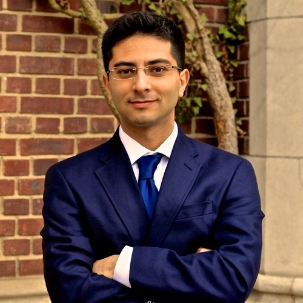
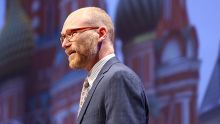
Constitution Day Lecture
Watch the lecture given by speaker Professor Sherif Girgis from University of Notre Dame Law School for a Constitution Day event.
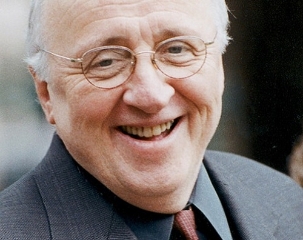
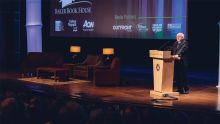
Annual Paul Henry Lecture, featuring Dr. Richard Mouw
The 24th annual Paul B. Henry Lecture featured Henry Institute Senior Research Fellow Dr. Richard Mouw speaking on "The Christian Use of Political Power" on April 4 at the Prince Conference Center.
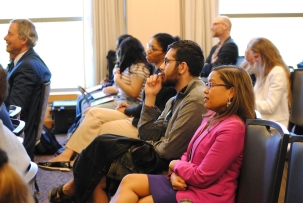
2024 Symposium on Religion and Public Life
The Paul B. Henry Institute will hold its twelfth biennial Symposium on Religion and Public Life from April 4-6, 2024, at the Prince Conference Center on the campus of Calvin University. The Symposium provides opportunities to present research, foster personal and professional collaboration, and learn from thoughtful practitioners. Symposium attendance is open to anyone interested in the intersection of religion and public life.
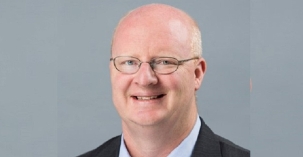
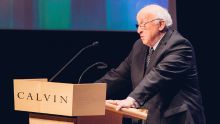
The Peacemaker: Ronald Reagan, the Cold War, and the World on the Brink
Dr. William Inboden discussed how Ronald Reagan developed a multifaceted and successful Cold War strategy to win a peaceful victory over Soviet communism in his lecture on March 8, cosponsored by the Calvin University President's Office.
Donate to the Institute
Support the work and programs of the Henry Institute by donating now.
Recent news & events
There are no announcements at this time.
-
Calvin professor emeritus reshapes the study of American religion and politics
For the past four decades, Calvin professor emeritus Corwin Smidt has been a pioneer of the study and research at the intersection of American religion and politics. This year, he received a Lifetime Achievement Award for this work from the world's premiere political science association.
News & Stories, September 7, 2023 -
From Hostility to Hospitality: How Calvin is Renewing Civics Education
The Civic Hospitality Project, a partnership between the Kuyers Institute and the Henry Institute, gives K-12 educators many curricular tools and exercises they can draw from in putting together their civics lesson plans. The goal? For civics education to aspire to more than simply tolerance.
News & Stories, February 20, 2023 -
Calvin University student awarded prestigious Hatfield Prize
Calvin senior Emily Steen is one of three students in the country to be awarded The Hatfield Prize by the Center for Public Justice.
News & Stories, January 19, 2023 -
Betsy DeVos returns to alma mater for conversation on state of education
On Thursday, November 18, Calvin alumna and former U.S. Secretary of Education Betsy DeVos returned to her alma mater for a moderated discussion with the university’s dean of education Brian Bolt.
News & Stories, November 21, 2022 -
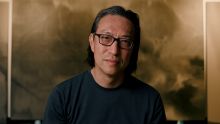
World-renowned artist Makoto Fujimura awarded Kuyper Prize
Makoto Fujimura is the recipient of the 2023 Kuyper Prize, awarded by Calvin University and Calvin Theological Seminary. Fujimura is the first visual artist to receive the prize, which has been awarded annually since 1998.
News & Stories, November 8, 2022 -
Richard Mouw returns to Calvin
Long-time philosophy professor returns to Calvin as senior research fellow
Spark, September 01, 2020 -
Richard Mouw comes home to Calvin
After 35 years at Fuller Theological Seminary, Richard Mouw, a widely-respected theologian and philosopher, is returning to Calvin University where his career in academia began. He's joining the Henry Institute as a senior research fellow.
News & Stories, June 4, 2020 -
Calvin creates associate provost position
In January, Kevin den Dulk became Calvin's first associate provost, a position that focuses on extending Calvin's mission to reach new populations.
News & Stories, February 11, 2020 -
Exploring the intersection of Faith and Democracy
At Calvin College, experts will dig deeper into the national discussion of the relationship between Christianity and American politics.
News & Stories, December 3, 2018


No upcoming events at this time.