Skip to Navigation | Skip to Content

Seminar Series: Christian Perspectives in Science (2013)

About the Series
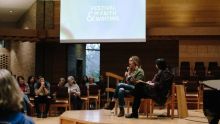
This seminar series explores interactions between Christian faith and scholarship in the natural and applied sciences. A schedule of recent seminars is given below. Seminar topics vary over a range of interdisciplinary issues, drawing insights from religion, philosophy, astronomy, geology, biology, biotechnology, chemistry, physics, engineering, nursing, mathematics, computer science, psychology, sociology, history, and other departments and programs.
Time and place
Seminars are typically held several Fridays per semester, 3:30-4:45 p.m., at Calvin College in Science Building room 110, unless otherwise noted. See Calvin's Visitor Resources for maps and directions to theScience Building. Faculty, students, staff and off-campus visitors are welcome.If you would like to receive regular email announcements for each week's seminar, or if you have other questions or comments, contact Loren Haarsma.
Leading a seminar
If you are interested in leading a seminar, contact Loren Haarsma. You don't have to write an entirely new lecture in order to lead a seminar. You could also:
—present a lecture you have given elsewhere or an article you have recently published;
—present a preliminary draft of a lecture or an article on which you are working, to get some feedback;
—lead a discussion about how to teach Christian perspectives on a certain topic in the classroom.
Other science-and-religion seminar series in the Grand Rapids area:
Grand Dialogue in Science and Religion
Human Origins Seminar Series, Calvin College

Archives

2001 | 2002 | 2003 |2004 | 2005 | 2006 | 2007 | 2008 | 2009 | 2010 | 2011 | 2012


Schedule for 2013


February 8, 2013, 3:30 p.m. in Science Building room 110

"More than Meets the Eye: Unpacking Decisions about How to Teach"


David Smith, Director of Kuyers Institute for Christian Teaching and Learning, Calvin College.


Abstract
This presentation will focus on the complexity of what happens in classrooms from the teacher's point of view. Together we will unpack a range of factors affecting the choices made within a short segment of teaching and learning, exploring how apparently simple teaching decisions can draw in a range of overlapping considerations. In so doing, the aim will be not only to show that there is more going on than may meet the eye, but also to begin to explore how our Christian beliefs and values might enter into everyday decisions about how to organize what we do in classrooms. In the discussion time, we'll focus on how this applies to teaching science and Christian perspectives in sciences classes.
Recordings and related resources
Presentation Slides, Audio Recording

February 15, 2013, 3:30 p.m. in Science Building room 110

"Created for Everlasting Life: Is Theistic Evolution Sufficient to Explain Original Human Nature?"


John Cooper, Professor of Philosophical Theology, Calvin Theological Seminary.


Abstract
Christians often endorse theistic evolution or evolutionary creation as the best way of combining science and Scripture to explain God's creation of humans. Scripture teaches that God created humans for everlasting life and receive it through Christ. The transition from life to everlasting life through death and resurrection requires God's supernatural action and a generic person-body dualism sufficient for personal existence beyond one's earthly body. Thus theistic human evolution that is consistent with biblical eschatology must affirm theistic supernaturalism and a minimally dualistic anthropology. I will argue that some current versions of theistic evolution meet these conditions, and some do not – in particular those committed to theistic naturalism and emergent physicalism.
Recordings and related resources
Presentation hanout, Audio Recording

March 1, 2013, 3:30 p.m. in Science Building room 010 (note the room number)

"A Universe Fine-tuned for Scientific Technology and Discovery"


Robin Collins, Distinguished Professor of Philosophy and Chair of the Department of Philosophy, Messiah College.


Abstract
In this talk, Professor Robin Collins will first present some of his recent research on the many ways in which the structure of the universe is precisely set, to an incredible degree of accuracy, so that we can develop technology and discover its structure. Then he will show how this fine-tuning for technology and discoverability undercuts the multiverse explanation, the leading non-theistic explanation for the much discussed fine-tuning of the universe for life. Finally, he will discuss how it provides important insight into God’s purposes for humans along with its theological implications.
Recordings and related resources
Audio_recording , handout , power_point_file.

April 5, 2013, 3:30 p.m. in Science Building room 110

"Mathematical Research: Invention or Discovery"


Christopher Moseley, Mathematics and Statistics Department, Calvin College.


Abstract
What is the meaning of mathematical research? Are the results purely inventions of the human mind, or are mathematicians engaged in discovery of properties of mathematical structures? In this talk I will examine proposed answers to this question in the light of classical and modern research in mathematics, and will suggest that research in mathematics has more in common with the physical sciences than is commonly believed.
Recordings and related resources
Audio_recording , slides.

April 19, 2013, 3:30 p.m. in Science Building room 010 (note the room number)

"Origins Today: Genesis Through Ancient Eyes"


John Walton, Professor of Old Testament, Wheaton College.


Abstract
The rift between faith and science in Christian circles today often results in the marginalization of Christians engaged in the sciences, impediments to evangelism, and the attrition of young believers who are told that Christianity is incompatible with the acceptance of evolution or an old earth. John Walton’s work in Genesis 1–3 offers a fresh perspective on this complex issue by seeking to understand the message of Scripture within its ancient context. A close reading of the Genesis creation account and an evaluation of its ancient Near Eastern setting raise the question of whether the Bible provides modern scientific information related to our understanding of the natural world (e.g., cosmology, biology, or human origins), or whether it offers a theological, rather than material, framework for thinking about the cosmos—for example, God made everything and is sovereign over it. This question in turn leads us to inquire whether today’s scientific conclusions regarding old earth, common descent, and parentage of the human race necessarily conflict with the Bible or theology.
Recordings and related resources
Origins Today link. Audio_recording , Slides