Wildrik Botjes Planetarium
Academics / Departments & Programs / Physics & Astronomy / Wildrik Botjes Planetarium
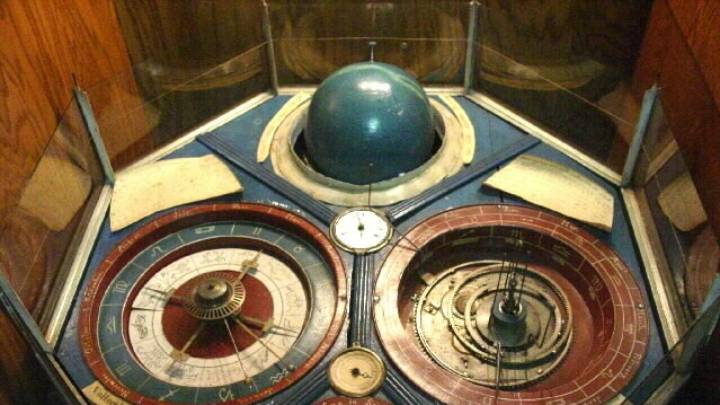
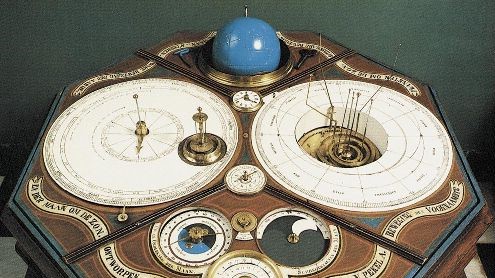
The Botjes planetarium is a fully operational model of the solar system completed in 1868. It is on display in North Hall.
Directions
Enter North Hall through the southeast door. The planetarium is opposite the door.
Additional maps:
- A Grand Rapids, Michigan, map with directions to the Calvin University campus.
- A printer-friendly campus map in PDF format.
-
Orbits of the Planets
- See how the planetariuim can predict the motion of the planets.
-
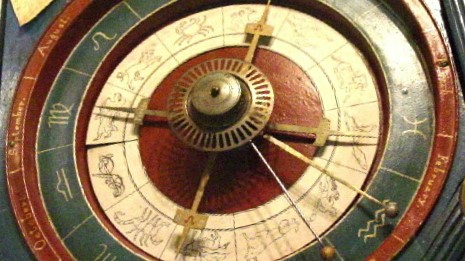
Motions of the Sun and Moon
- While the planets model shows the earth orbiting the sun, this model shows the perspective from Earth.
-
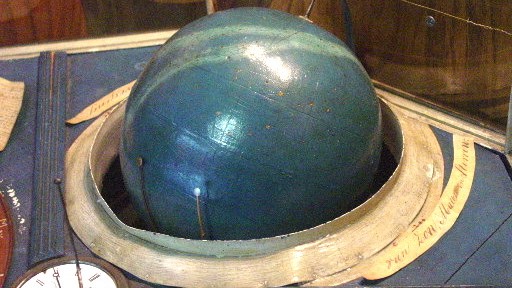
The Celestial Sphere
- The celestial sphere is a model for the two-dimensional direction to the stars.
-
Timekeeping
- The planetarium has kept the time of day and day of the week for 130 years
-
Mechanism and Restoration
- Discover what makes the Botjes planetarium tick.
-
History of the Botjes Planetarium
- The Botjes Planetarium has traveled across continents and been passed down the generations.
-
Another Planetarium
- Wildrik Botjes constructed another planetarium with some modifications to his earlier design.
-
About Us
- See how planetariums and models contribute to the scientific mission.
.jpg?language_id=1)

.jpg?language_id=1)
.jpg?language_id=1)
Take the next step:

ACADEMIC OPTIONS
With over 100 majors and programs, you’re bound to find something you love.
Browse by category
- Arts
- Business
- Communication & Media Studies
- Education
Undergraduate education
- Birth to Kindergarten
- Pre-Kindergarten to 3rd Grade
- 3rd to 6th Grade
- Art: Pre-K to 12th Grade
- French: Pre-K to 12th Grade
- Health & PE: Pre-K to 12th Grade
- Spanish: Pre-K to 12th Grade
- Special Education Pre-K to 12th Grade
- TESOL: Pre-K to 12th Grade
- Secondary Education
- English: 5th to 9th Grade
- Math: 5th to 9th Grade
- Science: 5th to 9th Grade
- Social Studies: 5th to 9th Grade
- English: 7th to 12th Grade
- Math: 7th to 12th Grade
- Science: 7th to 12th Grade
- Social Studies: 7th to 12th Grade
- Health Sciences
- Exercise Science
- Kinesiology (Pre-professional Emphasis)
- Nursing
- One Health
- Pre-Dentistry
- Pre-Medicine
- Pre-Occupational Therapy
- Pre-Optometry
- Pre-Pharmacy
- Pre-Physical Therapy
- Pre-Physician Assistant
- Pre-Podiatry
- Pre-Veterinary
- Public Health
- Recreation Leadership
- Speech Pathology and Audiology (BA, MA)
- Master of Speech Pathology
- Theraputic Recreation
- Humanities
- Ministry
- Science, Technology, Engineering & Mathematics
- Social Sciences
- World Languages & Cultural Studies

Apply to Calvin
It all starts here! We accept applications on a rolling basis throughout the year. All completed applications receive equal consideration.
Start your journey
Visit Calvin
Find the visit option that works best for you and get a taste for life at Calvin!
Browse Visit Options Launch the virtual tour
Request Info
Learn why Calvin’s dedication to faith and discovery have earned it the rank of #3 among regional Midwest universities.
Loading...

Costs & Financial Aid
Families from all economic backgrounds—many just like yours—are making Calvin work. Scholarships, grants and loans are the tools that make Calvin possible.
Explore financial aid & Scholarships How much does Calvin cost?