Faculty & Staff
Academics / Departments & Programs / Chemistry & Biochemistry / Faculty & Staff

- (616) 526-6051
- eric.arnoys@calvin.edu
- Chemistry and Biochemistry
- DeVries Hall 233 | Map

- (616) 526-7939
- rachael.baker@calvin.edu
- Chemistry and Biochemistry
- DeVries Hall 231 | Map

- (616) 526-8588
- michael.barbachyn@calvin.edu
- Chemistry and Biochemistry
- DeVries Hall 333 | Map

- (616) 526-7699
- david.benson@calvin.edu
- Chemistry and Biochemistry
- DeVries Hall 229 | Map

- (616) 526-8849
- nick.boersma@calvin.edu
- Chemistry and Biochemistry
- DH 335

- (616) 526-6019
- crystal.bruxvoort@calvin.edu
- Education, Chemistry and Biochemistry
- North Hall 052B | Map
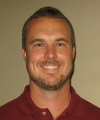
- (616) 526-6200
- john.christians@calvin.edu
- Chemistry and Biochemistry
- DeVries Hall 337 | Map

- jodi.dickerson@calvin.edu
- Chemistry and Biochemistry
- DeVries Hall 227 | Map

- (616) 526-7711
- herb.fynewever@calvin.edu
- Chemistry and Biochemistry
- DeVries Hall 227 | Map

- katie.kwiatkowsi@calvin.edu
- Chemistry and Biochemistry
- DeVries Hall 305

- (616) 526-6269
- mark.muyskens@calvin.edu
- Chemistry and Biochemistry
- DeVries Hall 301 | Map

- (616) 526-7700
- katherine.post@calvin.edu
- Chemistry and Biochemistry, Biology
- Devries Hall 100

- 616-526-6494
- dave.ross@calvin.edu
- Chemistry and Biochemistry
- DH 300A

Kumar Sinniah
Professor, Department Co-Chair, chemistry/biochemistry
Pre-Med/Pre-Dent/Pre-PA faculty advisor for chemistry/biochemistry majors
- (616) 526-6058
- kumar.sinniah@calvin.edu
- Chemistry and Biochemistry
- DeVries Hall 225 | Map

Chad Tatko
Associate Professor
Pre-Pharmacy faculty advisor for chemistry and biochemistry majors
- (616) 526-7584
- chad.tatko@calvin.edu
- Chemistry and Biochemistry
- DeVries Hall 307 | Map

- (616) 526-7950
- elise.vannoord@calvin.edu
- Chemistry and Biochemistry
- DH 337

- (616) 526-8729
- douglas.vandergriend@calvin.edu
- Chemistry and Biochemistry
- DeVries Hall 221 | Map

- brad.veldkamp@calvin.edu
- Chemistry and Biochemistry
- DeVries Hall 303

- (616) 526-6188
- laura.westrate@calvin.edu
- Chemistry and Biochemistry
- DeVries Hall 223 | Map
Emeriti

- (616) 526-6343
- carolyn.anderson@calvin.edu
- Chemistry and Biochemistry, Gender Studies
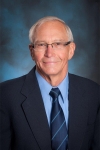
- (616) 526-6174
- blan@calvin.edu
- Chemistry and Biochemistry
- DeVries Hall 318 | Map
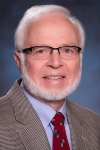
- (616) 526-6344
- dekock@calvin.edu
- Chemistry and Biochemistry
- North Hall 264 | Map
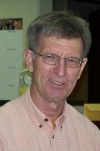
- (616) 526-6373
- leeg@calvin.edu
- Chemistry and Biochemistry
- North Hall 267 | Map
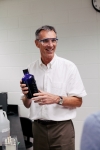
- (616) 526-6493
- larry.louters@calvin.edu
- Chemistry and Biochemistry
- DeVries Hall 303 | Map
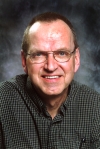
- (616) 526-6491
- pier@calvin.edu
- Chemistry and Biochemistry
- North Hall 267 | Map
Take the next step:

ACADEMIC OPTIONS
With over 100 majors and programs, you’re bound to find something you love.
Browse by category
- Arts
- Business
- Communication & Media Studies
- Education
Undergraduate education
- Birth to Kindergarten
- Pre-Kindergarten to 3rd Grade
- 3rd to 6th Grade
- Art: Pre-K to 12th Grade
- French: Pre-K to 12th Grade
- Health & PE: Pre-K to 12th Grade
- Spanish: Pre-K to 12th Grade
- Special Education Pre-K to 12th Grade
- TESOL: Pre-K to 12th Grade
- Secondary Education
- English: 5th to 9th Grade
- Math: 5th to 9th Grade
- Science: 5th to 9th Grade
- Social Studies: 5th to 9th Grade
- English: 7th to 12th Grade
- Math: 7th to 12th Grade
- Science: 7th to 12th Grade
- Social Studies: 7th to 12th Grade
- Health Sciences
- Exercise Science
- Kinesiology (Pre-professional Emphasis)
- Nursing
- One Health
- Pre-Dentistry
- Pre-Medicine
- Pre-Occupational Therapy
- Pre-Optometry
- Pre-Pharmacy
- Pre-Physical Therapy
- Pre-Physician Assistant
- Pre-Podiatry
- Pre-Veterinary
- Public Health
- Recreation Leadership
- Speech Pathology and Audiology (BA, MA)
- Master of Speech Pathology
- Theraputic Recreation
- Humanities
- Ministry
- Science, Technology, Engineering & Mathematics
- Social Sciences
- World Languages & Cultural Studies

Apply to Calvin
It all starts here! We accept applications on a rolling basis throughout the year. All completed applications receive equal consideration.
Start your journey
Visit Calvin
Find the visit option that works best for you and get a taste for life at Calvin!
Browse Visit Options Launch the virtual tour
Request Info
Learn why Calvin’s dedication to faith and discovery have earned it the rank of #3 among regional Midwest universities.
Loading...

Costs & Financial Aid
Families from all economic backgrounds—many just like yours—are making Calvin work. Scholarships, grants and loans are the tools that make Calvin possible.
Explore financial aid & Scholarships How much does Calvin cost?